
Free Retirement Overseas Guides
Social Security, taxes, Medicare and handling money, explained plainly.
Get The Guides

Overview
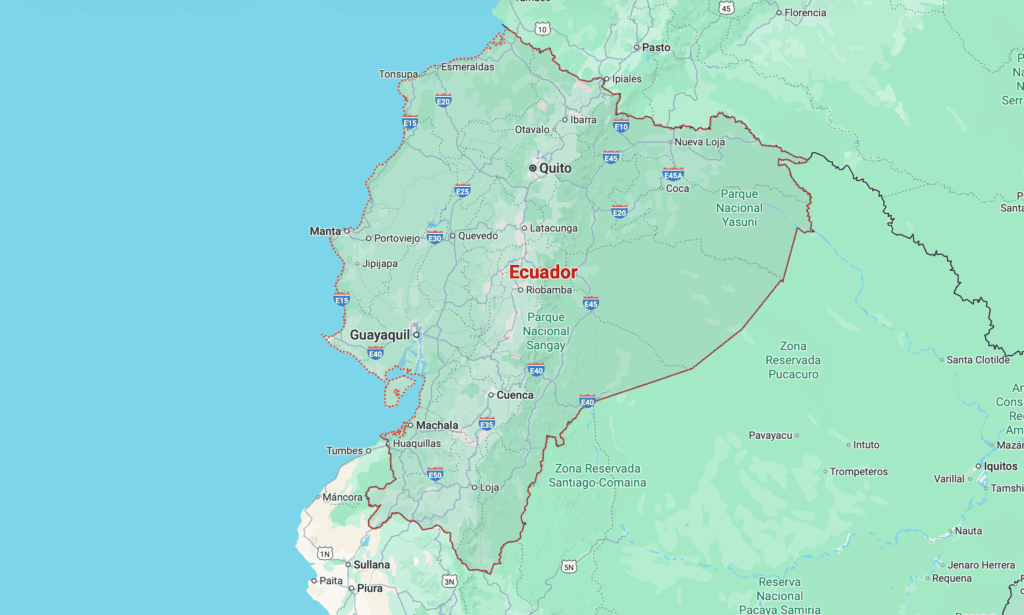
Ecuador is a country of astounding natural diversity, rich indigenous culture, and unique global positioning right on the equator. Amazon, mountains, beaches, Galapagos islands etc.
As a retirement spot, it’s a gem, affordable, culturally rich, and packed with natural wonders that keep life exciting. The healthcare is top-value, visas are accessible, and the variety of climates and attractions means boredom isn’t an option.
Using the U.S. dollar makes things simple, and the people are genuinely warm and welcoming.
Sure, recent security concerns warrant caution, especially on the coast, and bureaucracy can frustrate, but the highs outweigh them. If you crave diversity and value, this could very well be your “Retirement Utopia”.
Cost of Living
One of Ecuador’s biggest draws for retirees is the ability to enjoy a high quality of life at a fraction of the cost of North America or Western Europe.
I have been all over Ecuador, I’ve found it to be one of the most budget-friendly spots in Latin America for retirees. Your dollars stretch far here, literally, since the official currency is the U.S. dollar, no exchange hassles.
Of course, costs vary by location and lifestyle: coastal areas like Salinas might be pricier due to tourism, or cities like Cuenca due to it’s popularity, but when you start looking at places like Loja, Manta, Riobamba etc, life become much more economical.
As single person, I could live comfortably on US$1,600-2,200 monthly, covering rent, groceries, utilities, entertainment, fun and travel.
Rent for a nice one-bedroom in Cuenca runs US$400-700, groceries (think fresh fruits, seafood, and local staples) about US$200-300, and a meal at a mid-range restaurant US$5-10.
Factor in utilities at US$50-80, health insurance US$80, and as you can see, that leaves plenty of spare for transport, entertainment eating out, local travel etc.
In my experience it can be 50-65% cheaper than similar setups in the U.S., but factor in higher costs for imported goods. Overall, Ecuador is very affordable for a nice lifestyle.
Healthcare
Ecuador’s healthcare system is considered good and is one of the most affordable in Latin America.
The system is two-tiered: public via IESS (social security), which expats can join for a low fee (around US$80/month for comprehensive coverage), and private options that are high-quality and inexpensive.
For routine needs, public is fine; for specialists, go private, a doctor’s visit might cost US$20-50 out-of-pocket. Dental and even surgeries are fractions of U.S. prices.
I found the range and quality of hospitals and clinics especially impressive in Cuenca.
Visas
Navigating Ecuador’s visas is pretty straightforward, but prep your docs carefully.
Start with a temporary residency visa (good for 2 years), then go for permanent.
The popular Pensioner (Jubilado) visa requires proof of steady income, at least US$1,450/month the last time I looked for the main applicant, plus US$250 per dependent (like Social Security).
No age minimum, and it includes health insurance proof, police record, and a valid passport.
You can apply online or through consulates; fees are around US$450-1,500 when including services of an agency. It’s doable to DIY your visa and it will be cheaper, but a lawyer or agent helps with bureaucracy.
Another option that appeals to myself is the Investor Visa (min US$47,500 CD deposit / 2yrs) and a lower monthly income requirement of US$475 last time I checked.
The bottom line is you have options and they all appear to be pretty straightforward and relatively easy to obtain, with minimal requirements.
Culture
Ecuadorians are not like Colombians in my experience, they initially come across as a little more conservative and reserved. Of course, if you have no experience of Colombians, then they could well be some the friendliest people on planet earth 🙂
Ecuador’s culture is blend of Indigenous roots, Spanish influences, and regional flavors or particularities. I find that Ecuadorians are polite, family-focused, and proud of their heritage, especially in the small towns like Loja for example.
Social norms emphasize respect, use formal “usted,” be punctual (though “Ecuadorian time” is flexible), and embrace the laid-back vibe you will find in the coastal regions. Like many parts of Latin America, location dictates some of the social norms and how people act around you.
Learn some Spanish, embrace the local culture and you’ll fit right in. 🙂
Real Estate
Foreigners have the same property rights as Ecuadorian citizens and can buy property with just a valid passport.
It’s highly recommended to explore the country before deciding where to live. Online you will see a ton of advice, but the “My Golden Rule” is always try before you buy. Rent for at least 6 months in the place before you think about buying.
The differences between the bustling coastal city of Guayaquil, the historic highland city of Cuenca, and the capital, Quito, are immense.
Expect to pay anywhere from US$50,000-150,000 for a decent apartment in expat areas like Cumbaya (Quito) or the better areas of Cuenca.
Boots on the ground help, ask around and get familiar with Facebook market place.
Use agents or get a lawyer for title checks, transactions etc to avoid issues.
Money
The official currency of Ecuador is the U.S. Dollar. ATMs are widely available in cities and towns.
Credit cards are accepted in most hotels, major stores, and upscale restaurants.
However, Ecuador is still largely a cash-based society, especially in smaller towns and at local markets. Always carry some cash, preferably in smaller bills ($20 or less).
Opening a bank account is difficult as a tourist but becomes much easier once you have your residency visa and your Cedula (foreigner ID card).
Security
Ecuador was long a peaceful oasis, but 2025 has seen rises in violent crime tied to drug issues, especially on the coast. Government advisories urge high caution overall, with higher risks in areas like Guayaquil.
That said, expats living in popular highland cities like Cuenca and Quito, the primary security concern remains petty and opportunistic crime, similar to any other large metropolitan area.
The Galapagos Islands remain exceptionally safe.
Communications
Setting up your digital life in Ecuador is relatively straightforward, especially in major cities where the infrastructure is modern.
The market is dominated by a few large companies like Claro, Movistar, and the state-owned CNT.
Starlink is also an option for remote spots.
Fiber optic internet is widely available in cities, but service quality can vary significantly in more rural locations.
Attractions
Ecuador is a retiree’s playground, one of the most biodiverse places on Earth.
Explore the four worlds: Andean volcanoes like Cotopaxi for hikes, Amazon lodges for wildlife spotting, Pacific beaches for relaxation, and the Galapagos for unique adventures (expensive!).
You have a million resources online that will help you explore Ecuador, embrace them!
Climate
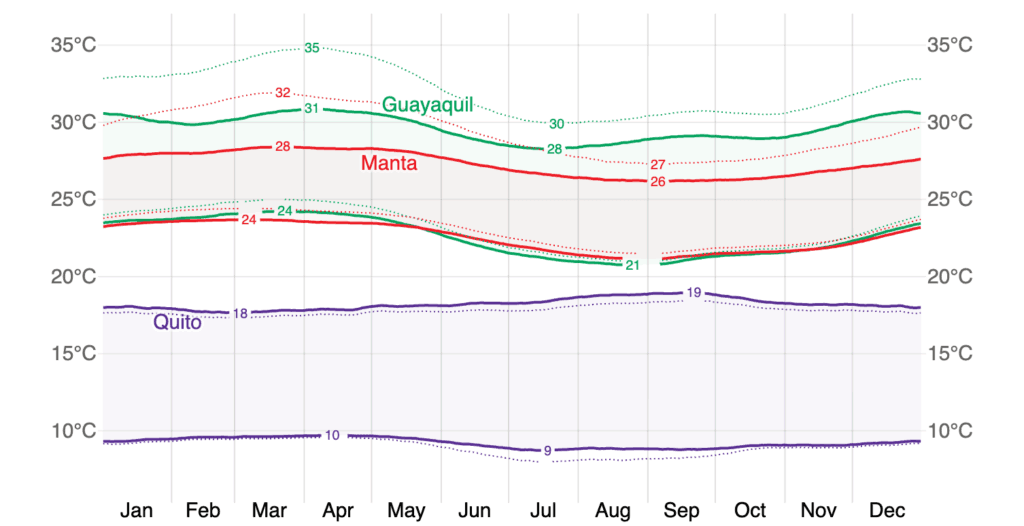
Ecuador has no real seasons. Instead, the climate is determined entirely by altitude and region.
Coasts and Amazon are hot/humid (75-95°F/24-35°C), with wet (Dec-May) and dry periods.
Highlands like Quito (9,000ft) offer eternal spring: 50-70°F (10-21°C) year-round, mild and breezy. Galapagos are tropical but cooler.
Climate and Average Weather Year Round in Ecuador
Source: weatherspark.com
