
Free Retirement Overseas Guides
Social Security, taxes, Medicare and handling money, explained plainly.
Get The Guides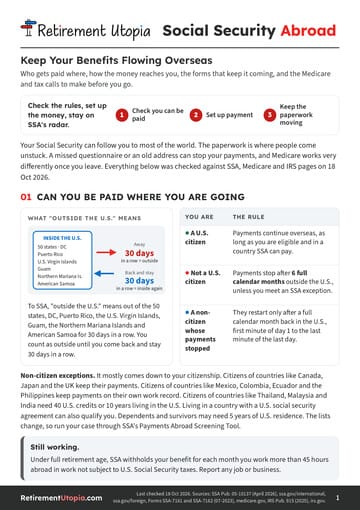
Overview
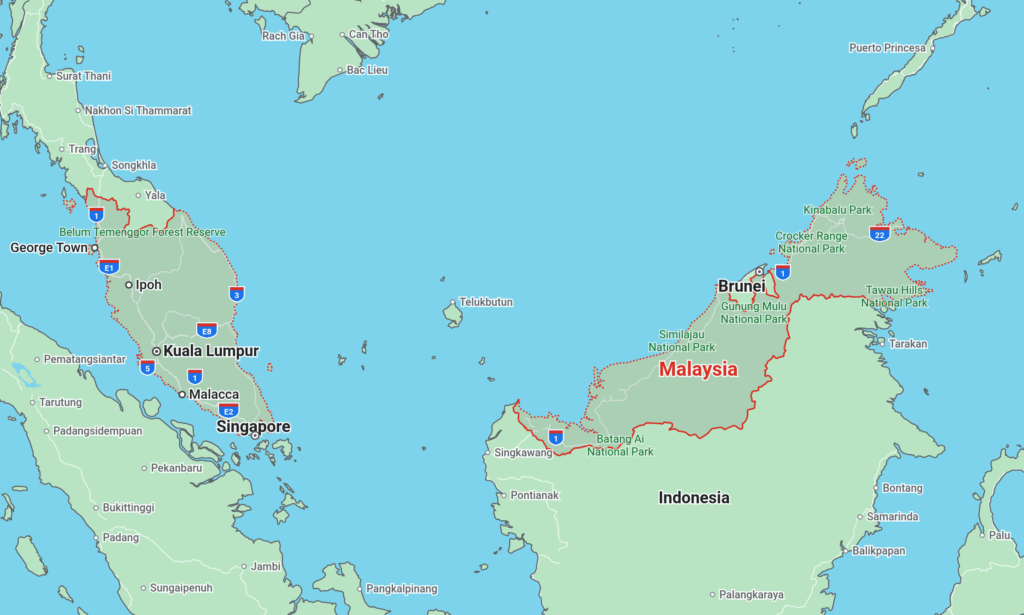
Malaysia is one of the easiest places in Asia to retire: English is spoken almost everywhere, the private hospitals are excellent, and the food is some of the best in the world.
It is a true melting pot of Malay, Chinese and Indian cultures, with modern cities like Kuala Lumpur, the colonial charm of George Town and Malacca, and rainforest and islands never far away.
Sure, the heat and humidity are constant and the MM2H visa now asks for serious money, but for many retirees this could very well be your “Retirement Utopia”.
Current cities covered: George Town, Ipoh & Malacca.
Cost of Living
One of Malaysia’s biggest draws for retirees is a high quality of life at a fraction of the cost of North America or Europe.
Your monthly budget will depend heavily on where you live and your lifestyle. Kuala Lumpur and Penang cost the most, while Ipoh and Malacca are much cheaper.
As a guide, Numbeo (October 2026) lists a one-bedroom apartment in central George Town at about US$700 a month and about US$370 outside the center. In Ipoh, the same apartment is about US$320 in the center and US$230 outside it.
Street food is cheap, and a meal at a hawker center costs a few dollars. Figures use US$1 = RM 4.05, the Bank Negara Malaysia rate on 30 Oct 2026.
Healthcare
Malaysia’s healthcare is among the best value in Asia, and the country is a major medical tourism destination.
The system is two-tiered: a low-cost public system and a large private sector with modern hospitals, short waits and English-speaking doctors. Most expats use private hospitals, especially in Kuala Lumpur, Penang and Malacca.
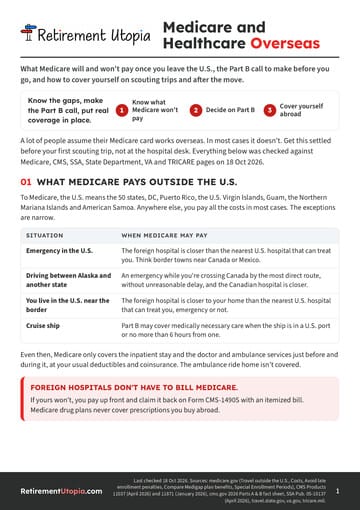
Plan on private health insurance, as Medicare does not pay for care in Malaysia. If you are a veteran, the VA Foreign Medical Program covers care for service-connected conditions.
Visas
US citizens can visit Malaysia without a visa for up to 90 days. For a long stay, most retirees use the Malaysia My Second Home (MM2H) program, run by the Ministry of Tourism.
The current tiers, from mm2h.gov.my:
Silver: a US$150,000 fixed deposit in a Malaysian bank, a 5-year renewable pass, and a home purchase of at least RM 600,000.
Gold: US$500,000, a 15-year pass, and a home of at least RM 1,000,000.
Platinum: US$1,000,000, a 20-year pass, and a home of at least RM 2,000,000.
Special Economic Zone (SEZ/SFZ): US$32,000 for applicants aged 50+, or US$65,000 for ages 21-49, a 10-year pass, and a home purchase in Forest City, Johor.
The main applicant must be at least 25 (21 for SEZ). Up to 50% of the deposit can be withdrawn after approval for a home, medical care or education. You can’t sell the home for 10 years, and applications go through a licensed MM2H agent.
If you’re 50 or over, there is no minimum stay, and MM2H participants pay no Malaysian tax on foreign income.
Culture
Malaysia’s greatest asset is its mix of people: Malay, Chinese and Indian communities living side by side, each with their own festivals, food and traditions.
Islam is the official religion, so dress modestly at mosques and in more conservative areas, and use your right hand when giving or receiving. People are polite, warm and helpful.
Embrace the local culture, try everything at the hawker stalls, and you’ll fit right in. 🙂
Real Estate
Foreigners can buy property in Malaysia, but each state sets a minimum price for foreign buyers, and some property types, such as Malay reserve land and low-cost housing, are off-limits.
MM2H participants must buy a home at or above their tier’s minimum price.
The “My Golden Rule” is always try before you buy. Rent for at least 6 months in the place before you think about buying, and always use a lawyer for title checks.
Money
The official currency of Malaysia is the Ringgit (RM, or MYR). ATMs are widely available, and credit cards and e-wallets like Touch ‘n Go are accepted almost everywhere in the cities.
Hawker stalls, markets and smaller shops still prefer cash, so always carry some.
Opening a bank account generally requires a long-term pass such as MM2H.
Read Retire Abroad on Social Security for benefit payments, bank accounts and US taxes.
Compare retirement costs, visas and healthcare by country.
Security
Malaysia is generally a safe country for retirees. The main concerns are petty crime, such as bag snatching, and scams, as in any big city.
Use common sense, keep valuables out of sight, and take care crossing the road.
Communications
Getting connected is easy. The main mobile providers are CelcomDigi, Maxis and U Mobile, and fiber internet from Unifi and others is widely available in the cities.
You need your passport to register a SIM. Starlink is also an option for remote spots.
Attractions
Malaysia packs a lot into a small country: Kuala Lumpur’s skyline, the street art and food of George Town, the hill stations of the Cameron Highlands, the islands of Langkawi and the Perhentians, and the rainforests of Borneo.
Cities we cover include George Town, Ipoh and Malacca.
You have a million resources online that will help you explore Malaysia, embrace them!
Climate
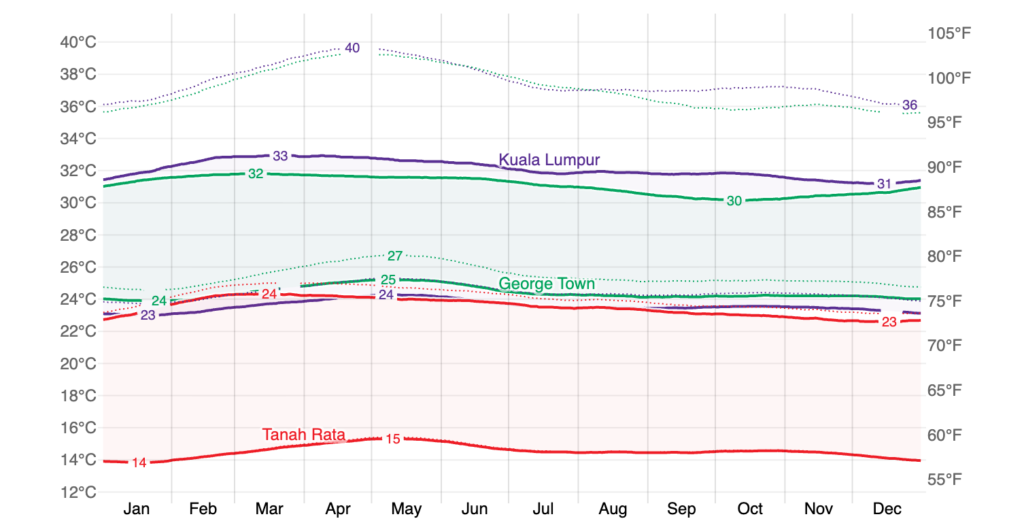
Malaysia is hot and humid all year, with highs of about 88-92°F (31-33°C) and lows of 74-78°F (23-25°C) in most cities.
There is no real dry season. The northeast monsoon brings heavy rain to the east coast from about November to March, while the west coast gets afternoon showers year round. The hill stations are much cooler.
Climate and Average Weather Year Round in Malaysia
Source: weatherspark.com
FAQs
Allow about $1,200–$2,000 a month for a comfortable single-retiree lifestyle across the covered cities (2026). City, housing, eating habits and air conditioning shape the total. Keep the capital needed for MM2H separate from your monthly spending budget.
One-bedroom apartment benchmarks run about $233–$704 a month across the covered cities with comparable October 2026 data. Rent depends on the city, distance from the center and building. Compare the furnishings, lease terms and any separate charges.
Federal MM2H is based on capital rather than a minimum monthly overseas pension. In 2026, Silver requires a $150,000 fixed deposit and a home purchase of at least about $147,882 (RM600,000 at BNM’s November 6, 2026 reference rate of RM4.0573 per dollar). The renewable pass lasts 5 years. Social Security can pay your living expenses, but it does not replace the deposit or home purchase. State programs have separate rules.
Yes. Malaysia participates in International Direct Deposit (2026). Use SSA-1199-OP56 with your bank. Payments arrive in ringgit. A US bank account is another option for receiving your benefit, with money transferred to Malaysia as needed.
The city guides list private hospitals in George Town, Ipoh and Malacca. You can pay through Malaysian or international insurance, or directly for treatment. Foreign patients also use public hospitals under foreign-patient charging rules. Living in Malaysia does not give you the same subsidized charges as a Malaysian citizen.
Medicare generally does not cover routine care in Malaysia. Arrange coverage for where you live and keep appointments, medications and policy deductibles in your budget. Medicare for treatment in the US is separate from your Malaysian healthcare arrangements.
No. George Town's city boundary covers Penang Island, including areas outside the historic center. Melaka state and Malacca city are also different areas. Use the place's boundary before comparing a population figure with Ipoh or another city, then compare the neighborhoods where you would live.
Renting does not replace the required home purchase. Federal MM2H requires an approved participant to buy and own a home meeting the chosen tier's minimum. MOTAC's terms prohibit selling that home for 10 years, with an exception for upgrading to a higher-value home (terms checked in 2026).
Current MOTAC terms require at least 90 cumulative days a year (checked November 2026). For federal applicants ages 25 to 49, the principal or dependents can fulfill that stay requirement. The published rule does not give applicants age 50 and over a blanket exemption.
Yes. Federal MM2H allows a spouse as a registered dependent. The published Silver terms also allow qualifying children and parents or parents-in-law. Register family members under the program rather than assuming your own pass covers their stay.
Silver does not permit career or business activities under its published terms. The relevant separate pass is required for those activities. These are Silver conditions, not a rule for every MM2H tier or state program.
MOTAC's Silver terms allow the deceased principal's MM2H pass to transfer to next of kin among the registered dependents. Keep the dependent-registration records with the family's immigration papers.
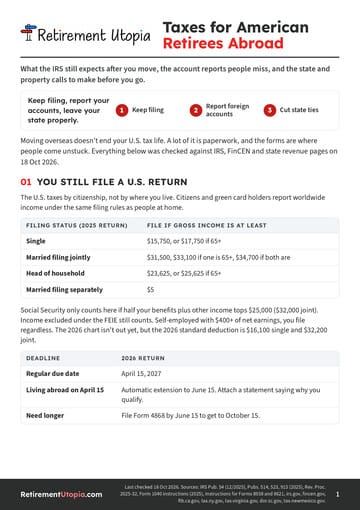
No. US citizens remain subject to US tax rules on worldwide income, with filing based on their income and circumstances. The foreign earned income exclusion does not exclude Social Security retirement benefits. Malaysia has no US income-tax treaty on the IRS list checked in November 2026.
A Malaysian fixed deposit is a foreign financial account for US reporting purposes. US persons generally must file an FBAR when the combined value of reportable foreign accounts exceeds $10,000 at any time during the calendar year (rule checked in 2026). Apply that test to all reportable accounts together. Other foreign-asset reporting can also apply.