
Free Retirement Overseas Guides
Social Security, taxes, Medicare and handling money, explained plainly.
Get The Guides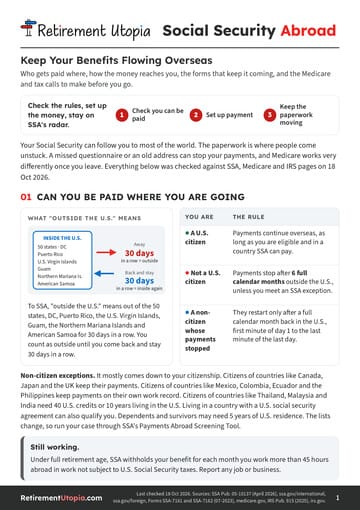
Overview
Welcome to the Kingdom of Thailand, the “Land of Smiles.” For decades, Thailand has been a global hub for tourism and a premier destination for expatriates, renowned for its breathtaking beauty, rich culture, and incredible hospitality.
From its bustling cityscapes and serene temples to its world-famous beaches, Thailand is a country that captivates the senses and welcomes all who come to visit or call it home.
For retirees it offers world-class private hospitals, a low cost of living outside the tourist hotspots, and a visa built for people aged 50 and over. Sure, the heat, the paperwork and the 90-day reports take some getting used to, but for many it could very well be your “Retirement Utopia”.
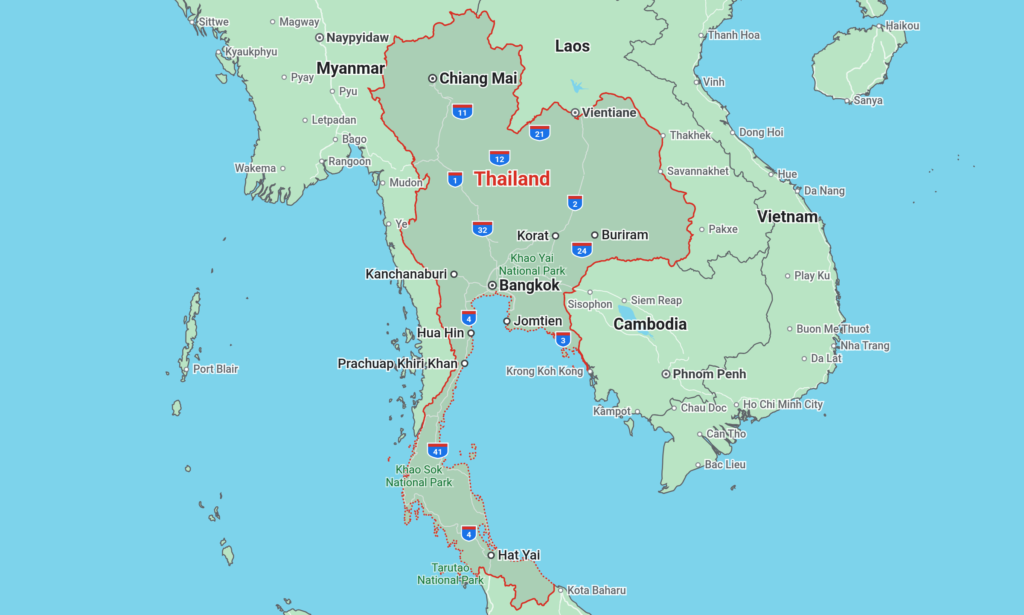
Current cities covered: Buriram, Jomtien, Hat Yai, Hua Hin, Kanchanaburi, Korat, & Prachuap Khiri Khan
Cost of Living
One of Thailand’s biggest draws for retirees is the ability to enjoy a very high quality of life at an affordable cost.
While prices in tourist hotspots like Phuket and Koh Samui can be higher, your money generally goes much further here than in Western countries. Your monthly budget will depend heavily on your location and lifestyle, but affordable street food, transport, and housing are widely available.
As a guide, Numbeo (October 2026) puts a single person’s monthly costs before rent at about THB 23,500 (US$700) in Bangkok and THB 18,100 (US$540) in Chiang Mai. A one-bedroom apartment in Bangkok runs about THB 11,200 (US$330) outside the center and THB 22,500 (US$670) in the center.
Smaller cities like Korat, Hat Yai, Buriram and Kanchanaburi cost much less, while Hua Hin and Jomtien sit in between. Figures use US$1 = THB 33.65, the Bank of Thailand rate on 22 Oct 2026.
Healthcare
Thailand’s healthcare system is ranked among the best in Southeast Asia, particularly its private hospital network.
The country is a leading destination for medical tourism, with world-class private hospitals in Bangkok, such as Bumrungrad, Bangkok Hospital and Samitivej, offering excellent care at reasonable prices.
A two-tiered system exists, with a public option for citizens and a robust private sector that is the preferred choice for most expatriates. Plan on private health insurance: the O-A visa requires cover of at least THB 3,000,000 (or US$100,000).
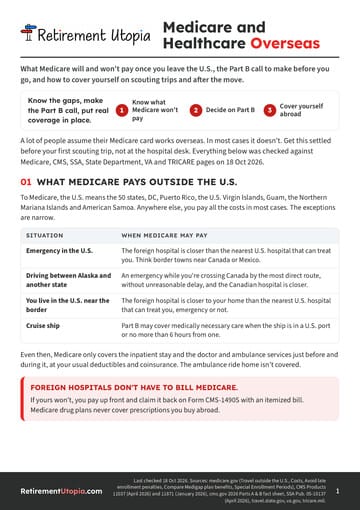
Medicare does not pay for care in Thailand. If you are a veteran, the VA Foreign Medical Program covers care for service-connected conditions.
Visas
Understanding Thailand’s visa system is a critical step in planning your relocation. The rules change often, so check the latest criteria before you apply.
Non-Immigrant O (retirement): age 50 or over, with monthly income of at least THB 65,000, or THB 800,000 in a Thai bank, or a mix of income and savings adding up to THB 800,000 a year. The deposit must sit in the account for 2 months before you apply and 3 months after approval, and then not drop below THB 400,000. You apply from home through thaievisa.go.th and extend each year in Thailand.
Non-Immigrant O-A: the same money rules, applied for from the US, plus health insurance of at least THB 3,000,000 (US$100,000).
Long-Term Resident (LTR) Wealthy Pensioner: a 10-year visa for retirees aged 50+ with passive income of at least US$80,000 a year, or US$40,000 plus a US$250,000 Thai investment. The fee is THB 50,000. Details: ltr.boi.go.th.
Thailand Privilege (Elite) visa: a paid membership visa from THB 900,000 for 5 years (Gold) up to THB 2,500,000 for 15 years (Diamond). Details: thailandprivilege.co.th.
Most long-stay visa holders report their address every 90 days, and need a re-entry permit (THB 1,000 single, THB 3,800 multiple) before leaving the country. Source: Thai Immigration Bureau.
Culture
Beyond its stunning landscapes, Thailand’s greatest asset is its unique and deeply rooted culture. To truly enjoy your time here, understanding the social nuances is key.
Thai culture is shaped by Theravada Buddhism, a deep reverence for the Monarchy, and a strong sense of national pride. Social etiquette is guided by the concept of “saving face,” which avoids confrontation and emphasizes respect, particularly for elders.
Learn a few words of Thai, smile, keep your cool and you’ll fit right in. 🙂
Real Estate
Foreigners have specific rights regarding property. While a foreigner cannot own land in their name, they are permitted to own condominium units freehold (outright), within the 49% foreign quota of each building.
For houses and land, the most common legal structure for foreign possession is a long-term leasehold, typically for a period of 30 years, which can be renewed.
The “My Golden Rule” is always try before you buy. Rent for at least 6 months in the place before you think about buying, and always use a lawyer for title checks.
Money
The official currency of Thailand is the Thai Baht (THB). ATMs are ubiquitous, and credit cards are widely accepted in hotels, shopping malls, and larger restaurants. Watch the ATM fees: most Thai banks charge about THB 250 per withdrawal on a foreign card, on top of your own bank’s fee.
However, Thailand is still very much a cash-based society. Street food vendors, local markets, and smaller shops will almost always require cash.
Opening a local bank account generally requires a Non-Immigrant visa and proof of address in Thailand.
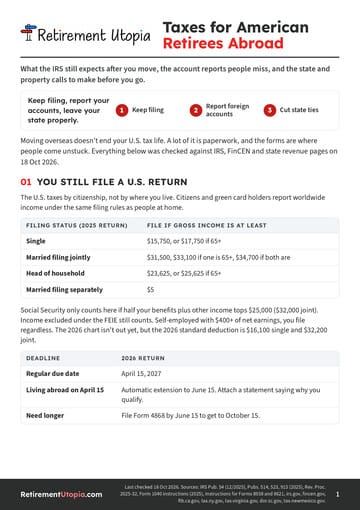
Taxes: under the US–Thailand tax treaty, US Social Security is taxed only in the US. If you spend 180 days or more a year in Thailand, other foreign income earned from 2024 onward can be taxed when you bring it into the country. LTR Wealthy Pensioners are exempt. Source: IRS, US–Thailand treaty.
Read Retire Abroad on Social Security for benefit payments, Medicare and US tax rules.
Compare retirement costs, visas and healthcare by country.
Security
Thailand is generally a safe country for retirees. The main concerns are petty crime and scams in tourist areas, and the roads, which are some of the most dangerous in the region.
The far southern provinces near the Malaysian border have long-running unrest, but they are far from the usual retirement spots.
Use common sense, keep valuables out of sight, and take care on the roads, especially on a motorbike.
Communications
Getting connected is straightforward. The main mobile providers are AIS, True and the state-owned NT. You need your passport to register a SIM.
Fiber internet is widely available and cheap in cities and most towns. Starlink is also an option for remote spots.
Attractions
Thailand is a retiree’s playground: temples and night markets in Bangkok and Chiang Mai, the islands and beaches of the Andaman Sea and the Gulf, the mountains of the north, and some of the best food on the planet.
Cities we cover include Hua Hin, Jomtien, Korat, Hat Yai, Buriram, Kanchanaburi and Prachuap Khiri Khan.
You have a million resources online that will help you explore Thailand, embrace them!
Climate
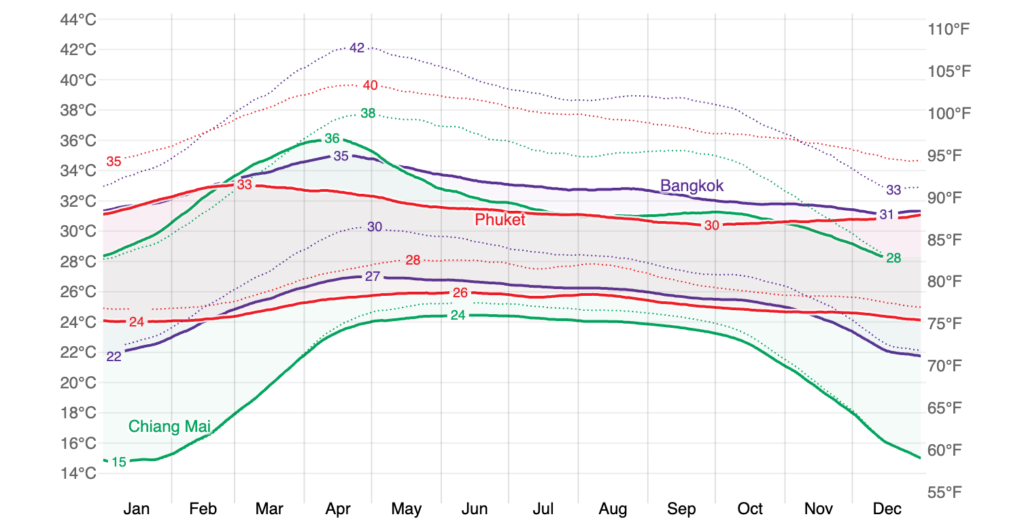
Thailand is hot all year, with three seasons: cool and dry (November to February), hot (March to May, with April the hottest month) and rainy (roughly May to October).
Most of the country sees highs of 86-98°F (30-37°C). The north is cooler in the winter months, but has smoky air from crop burning from about February to April.
Climate and Average Weather Year Round in Thailand
Source: weatherspark.com
FAQs
Allow about $1,000–$2,000 a month for a single retiree across the covered cities (2026). City, beach location, housing and air conditioning affect the total. Keep the money you must show for a visa separate from your living budget.
One-bedroom apartment benchmarks run about $149–$611 a month across the covered cities with comparable October 2026 data. City, distance from the center and building affect the price. Compare the lease length and electricity charges as well as the advertised rent.
Yes. Pension income can meet the financial test for the Non-Immigrant O retirement route. For applicants age 50 and over, the published income threshold is about $1,932 a month (THB 65,000), or a bank balance of about $23,774 (THB 800,000). The conversion uses THB 33.650 per dollar on October 22, 2026. An initial O stay lasts 90 days. Annual retirement extensions in Thailand have their own bank-balance and evidence rules. An O-A application from the US has separate documentation and insurance requirements.
Yes. Thailand participates in International Direct Deposit (2026). Use SSA-1199-OP107 with your bank. Payments to the Thai account arrive in baht. Receiving the benefit in a US account is another option. Keep SSA informed of your actual overseas address whichever bank you use.
They use Thai or international insurance, pay directly for care, or combine the two. The O-A route requires health insurance. Check both the visa requirements and the medical services your policy covers. The city guides identify local hospitals, including Bangkok Hospital Pattaya for the Jomtien area and regional hospitals elsewhere.
Medicare generally does not cover routine care in Thailand. Your Thai healthcare budget needs to cover insurance, appointments and prescriptions. Medicare coverage for visits back to the US is a separate decision from paying for care where you live.
No. The covered places include smaller municipal towns, regional cities and the Pattaya urban area. Jomtien is part of Pattaya City, not a separate municipality. Registered municipal populations and the surrounding urban area use different boundaries. Your daily routine will depend more on the neighborhood than the municipal total.
The Los Angeles consulate's income route calls for an original income certificate showing your monthly pension. Get your SSA benefit verification letter and prepare the evidence for that route. The O-A income-route upload checklist also asks for a current bank statement showing incoming income. The bank-balance alternative has its own financial evidence.
Each person needs an appropriate visa. The Los Angeles consulate's family-visa page says family members of Non-O holders do not qualify for its Non-O family route. A spouse who meets the retirement requirements can apply in their own right. Check both applications before choosing the principal retiree's route.
No. The consulate asks for accommodation arrangements, which can include a hotel booking. Property ownership is not a requirement on its Non-O retirement checklist. Renting does not remove the pension-income or bank-balance requirement.
No. Non-O and O-A retirees staying continuously beyond 90 days must report their address under the rules checked in 2026. The report does not extend permission to stay. Keep the reporting date and your stay-expiry date separate. Leaving Thailand and returning restarts the reporting count.
Yes. US citizens remain subject to US tax rules on worldwide income. The US–Thailand income-tax treaty can affect particular income, but it does not make all retirement income tax-free. Social Security retirement benefits do not qualify for the foreign earned income exclusion.